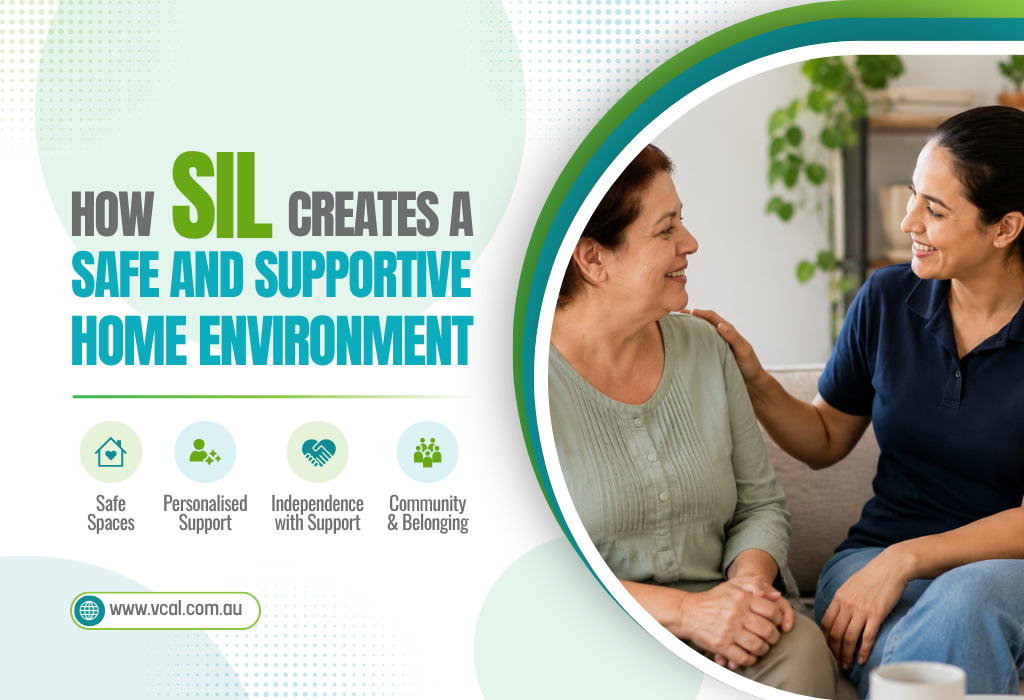
How SIL Creates a Safe and Supportive Home Environment
Quick answer: The right SIL provider in NSW should offer safe accommodation, experienced support workers, personalised support and opportunities to develop independence. When comparing providers, consider their NDIS registration, support services, staff experience, accommodation, location, support ratios, communication and approach to person-centred care.
What Makes a SIL Home Environment Safe?
A safe Supported Independent Living home comes from several things working together, not any single feature. Trained support workers who understand a participant's routines, communication style, and support needs are the foundation. On top of that, the
physical home itself needs to suit the person living in it, which might mean accessible bathrooms, clear pathways for mobility aids, adjustable furniture, or sensory-friendly lighting depending on what's needed.
Emergency planning is just as important as day-to-day support. Every SIL home should have a clear, documented plan for what happens if something goes wrong, whether that's a medical event, a behavioural support need, or a practical issue like a power
outage. Staff are trained on these plans and know exactly what steps to take, so participants and their families aren't left guessing about how a situation will be handled.
None of this works as a generic template applied across every home. A safe SIL environment is shaped by the individual living there, and that starts with how the support is designed in the first place.
How Does A SIL Design Support Around the Individual?
Every good Supported Independent Living plan starts with an individual assessment, usually carried out before a participant moves in or transitions to a new provider. This looks at daily routines, communication preferences, medical or therapeutic needs,
personal goals, and the kind of home environment that suits the person best.
From there, support hours, staffing ratios, and rostering are built around what was found in that assessment rather than a fixed formula. Some participants need overnight support, others need help mainly around meal times or community outings, and some
need a consistent small team of familiar faces rather than rotating staff. Because of this, no two SIL arrangements ever look quite the same, even within the same shared home.
This individualised approach doesn't stop once support begins. Plans are reviewed regularly, and staffing or routines are adjusted as a participant's needs, goals, or circumstances shift. A plan that suited someone twelve months ago might not be the
right fit today, and a responsive provider builds that flexibility in from the start.
How Does A SIL Avoid Dependence?
One of the more common misconceptions about Supported Independent Living is that it means having everything done for you. In practice, the opposite is usually the goal. Quality NDIS SIL providers build skills gradually, encouraging participants toward greater
independence over time rather than stepping in for every task.
This might look like a support worker teaching someone to prepare a simple meal themselves rather than cooking it for them, or working alongside a participant on budgeting and shopping until they feel confident doing it with less assistance. Where a
participant's plan includes it, this skill-building often ties in closely with Capacity Building supports, which focus specifically on developing everyday living skills, social participation, and independence over the longer term.
The pace and focus of this skill development is different for everyone. Some participants are working toward living with less support altogether, while others are building specific skills within a SIL setting they'll likely need long-term. Either way, the
emphasis stays on growth and choice rather than a fixed level of assistance that never changes.
How Does A SIL Provide Consistent Care and Risk Management
Consistency matters just as much as capability when it comes to SIL support. Documented risk plans and a consistent staffing roster mean participants and families always know who is supporting them and how any issues will be handled, rather than
having to explain the same needs to a new face each week.
NDIS registered providers must also meet strict safeguarding standards, staff screening requirements, and regular safety reviews across all supported independent living accommodation, in line with the guidelines set out on ndis.gov.au. This typically covers
things like worker screening checks, incident reporting processes, and periodic audits of how a home is being run, alongside any personal care and community nursing support a participant might also be receiving.
For families, this layer of oversight is often just as reassuring as the day-to-day care itself. Knowing that a provider is accountable to defined standards, and not just relying on goodwill, makes it easier to trust that issues will be caught and addressed rather
than overlooked.
How Can You Build Social Connection Through SIL
Living in a shared SIL home or accessing community programs through a provider can play a big part in easing isolation. Shared homes naturally create opportunities for participants to build friendships with housemates, while community access activities,
outings, and group programs help maintain connections outside the home as well.
The key is that this social side of SIL is optional and participant-led rather than compulsory. Some people thrive in a shared living environment and enjoy regular group activities, while others prefer more one-on-one time and a quieter routine. A good provider makes both approaches possible, and trusted support stays close by whenever it's needed, whether that's help joining a local group or simply having someone available if a participant wants company.
Common Myths About Supported Independent Living
- SIL means living in an institutional-style facility. In reality, SIL usually takes place in an ordinary home, whether that's shared with a small number of housemates or a standalone property, set up and supported around the people living there.
- More support hours are always better. Support hours are matched to what a participant's plan and assessment actually show they need. Extra hours that aren't needed can work against the goal of building independence over time.
- SIL and Supported Independent Living accommodation are the same as Specialist Disability Accommodation (SDA).SIL refers to the support delivered in the home, while SDA refers to the physical building itself. Many participants access both, but they're funded and assessed separately under the NDIS.
- Once a SIL plan is set up, it stays the same. Plans are reviewed regularly and adjusted as a participant's needs, goals, or living situation change, rather than being locked in from day one.
Choosing the Right SIL Provider
With so many providers operating across the NDIS SIL NSW space, it helps to know what to actually look for.
Choosing a SIL provider with genuine local experience in your area is the most important part. A good provider
will understand the practical realities of coordinating staff and services in that region.
Transparent pricing is another marker worth checking early. A provider should be able to clearly explain
what's included in support costs and how those costs relate to a participant's NDIS plan, without vague
or shifting explanations. Beyond the practical details, look for a provider whose approach is genuinely
person-centred, like V Care, where support is shaped around the individual rather than fitted into an
existing template.
Final Thoughts
SIL isn't just accommodation. When it's done properly, it gives participants a real path toward independence, with the safety, dignity, and everyday choice that should come standard, and support that keeps pace as their needs and goals shift over time.
The right SIL arrangement looks different for everyone, and that's the point. A safe home environment isn't something a provider sets up once and leaves alone. It comes from ongoing assessment, staff who genuinely know the people they're supporting,
documented risk and emergency plans that actually get followed, and a willingness to adjust support as circumstances change.
Contact V Care today or submit a referral to start your journey toward real independence.
Read Other Blogs